La bella Italia. From Venaria to Pitti Palace
di // pubblicato il 02 Novembre, 2011
- Translated by Giacomo Alberti -
Florence was waiting for it with trepidation.
We left it at Venaria Reale, captivated by its charm and filled with proud. We re-find it now at Pitti Palace, renovating our astonishment and praise.
Reached the end of the celebrations, which pay homage to the Italian Unity sesquicentennial and final date of the expositive program Firenze 2011.Un anno ad arte, the exhibition La bella Italia. Arte e identità delle città capitali, (of which we had talked at various times during spring) landed at the halls of Pitti Palace on Tuesday 11th October.
Why repeating the exhibition, and why right in this site, after the Turinese date?
The reasons are simple, it is worth clarifying them.

First of all, Florence was the second capital of Italy, from 1865 to 1870; during this period Pitti Palace, already abided to Medici and Lorenesi dynasties, became a Sabaudian residence, passing from Turinese to Florentine lineage.
Moreover, the Tuscany chief city is associated with the language and the art with good reason: bridging the XIII and XIV century , Dante and Giotto accomplished an authentic revolution in the literary and figurative language, laying the foundations for the further humanistic and renaissance innovations.
However, it must be remembered also that from the mid Cinquecento on, Giorgio Vasari, whose anniversary of the birth also falls this year, (the quincentennial) attending upon the Medici sets down the foundations for the modern conception of art fruition on three distinct fronts. Renowned father of the modern art criticism, due to the massive work “Vite”, he decreed also the birth of the fist public museum, the Uffizi Gallery, and established the first academic institution, the Arts and Design Academy, conferring intellectual dignity on activities until then regarded as mechanical.

There are evident differences between the two royal palaces.
From the 360 oeuvres mounted among the 4000 metres long Citroniera and the Scuderie Juvarriane, the latter of which is made more fascinating by the Luca Ronconi displays, the number diminishes to the 2000 metres of Pitti Palace. This, however, continues to host its permanent collections, which until the 12th of February are displayed alongside the 300 models considered to be the most representative of Italian identity.
Although the halved spaces, the result is a new suggestive harmony, fruit of a long labour (started working behind the scenes in conjunction with the Turin edition design) outcome from the co-operation between the architect Marco Linari with Cristina Acidini and Maria Sframeli, to whom is to add the single sections curators and a great number of assistants.
To a first disorientation due to the spaces fragmentation, the team has provided to orient the visitor through a fil rouge, the red carpet (which takes the place of the green carpet of leaves of Venaria) which crosses the halls involved in La bella Italia, and also by means of the alternation of the blue and red colours along the path, locates the several cities.
A three day single ticket allows the admission to the entire complex of the Florentine royal palace. Those who were to be interested in the single sections, instead, can purchase the ticket concerning the museum in which the city is host.

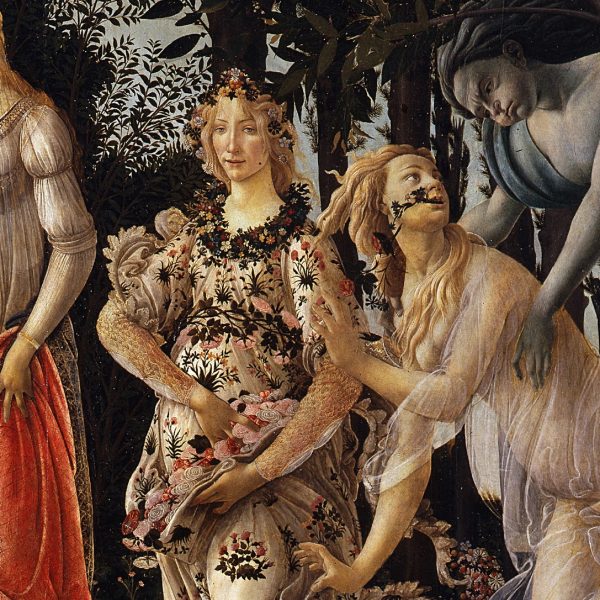
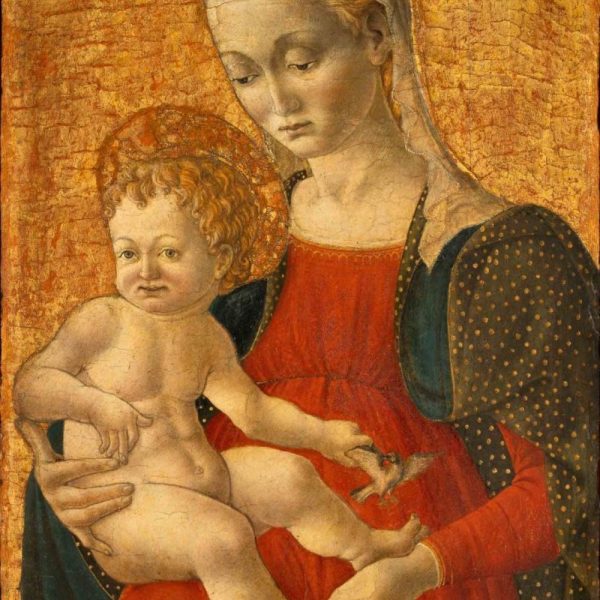
The oeuvres exposed stand out in their full historical-artistic value: not only aesthetic masterpieces, but also document of the Italian past, previous and functional to the Unification; insiders and outsiders, anyone visiting the exhibition comprehends proudly to be face to face with history, in a path through images.
Italy and the Italian spirit existed well before 1861, as Giuseppe Galasso and Antonio Paolucci clarify in the fine catalogue published by Silvana Editoriale, reprinted in its Florentine version, which we suggest to read so as to find explicit in the critic-literary form what the oeuvres narrate to our eyes along the exhibition itinerary.
A reality perceived outside of the peninsula, of which our ancestors were well aware long before the Unification. The “country felt”, perceived as national feeling, had preceded by centuries the “wanted nation”, namely the Italian unitary state.
The Unification was born from the awareness, argues Antonio Paolucci, “that Italy is made of peoples, that every peoples recognise themselves in capitals, more or less large, more or less famous, in cities that (at least among the well-educated elites ) although made fraternal inasmuch as language, religion, ideals and shared feelings, were distinct and proud of their diversity moulded by history, made evident by traditions and customs , by literature and music, but above all by the form of the Arts, by the range of pictorial styles”.
It is right from variety and multiplicity that Italy drew strength, a constructive competitiveness, a continuous challenge to enhance the good offered by peculiar traditions, protecting them as if it was something of certainly precious.
A shared feeling at the base of the Italian identity.
Therefore, the exhibition dedicates seven sections to as many pre-unification capitals, expression of distinctive “schools” from a figurative point of view.
A unanimous view, which doesn’t smooth out the singular geographical area and culture peculiarities, though.
It is precisely the single cities, the single bell towers , to represent themselves according to their vision, narrating their most ancient identity without stereotypes , at the coming of 1861.

At the Argenti Museum, summer Neighbourhood of the palace, Rome tells about its stratified history: from the mythological origins (the Romolo and Remo myth) to the antiquity, throughout the emperor busts, to which follow those of Popes of the Christian capital, up to the Porta Pia breakthrough which defines the annexation to Italy.
At the first floor, the Palatine Gallery plays as a background for the splendours of the two first capitals of the Italian unification; the White Hall is dedicated to Florence and the Bona Hall to Turin, the most illustrious example of politics and industrial renewal, which doesn’t omit the attention to the wonderful Piedmontese landscape, though.
The Angiolini Neighbourhood holds the glories related to the Peninsula northern cities: Bologna, which the born of the first Italian University has handed down to posterity as “the erudite”, eclectic city of culture and art, in the passage from the expressionist outcomes of the fourteenth and fifteenth centuries to the classicism of Carracci and Guido Reni. Again, Modena and Parma with their spectacular galleries; Milan marked by Leonardo, a city enlightened by the dialogue with the transalpine countries.
The Gallery of Modern Art delights us with the splendour of Venice, cosmopolitan and unique, of great painting tone, illusionist and of landscape , of the Palladian architecture, sighed link with the Orient.
The Costume Gallery, with its clothes, and the Meridiana Palace constitute the scenario of the other Maritime Republic, the “wonderful and rich” Genoa, a financial capital which converted its profits in Baroque Art. Finally, the reign of Naples with its many contradictions, from ferocious cruelty to the most felt charity, and the Palermo Viceroyalty, yellow-golden island from the international fragrance of the Mediterranean sea.

On this 150th birthday La bella Italia has decided to tell its story, on the eve of 1861, to let us comprehend the reasons which brought to the unification, and to enable us with the knowledge and the proud of this country formed by thousand faces which coexist in a unique national feeling.